Calm on a Busy Lane: How to Quiet a Characterful House Without Gutting It

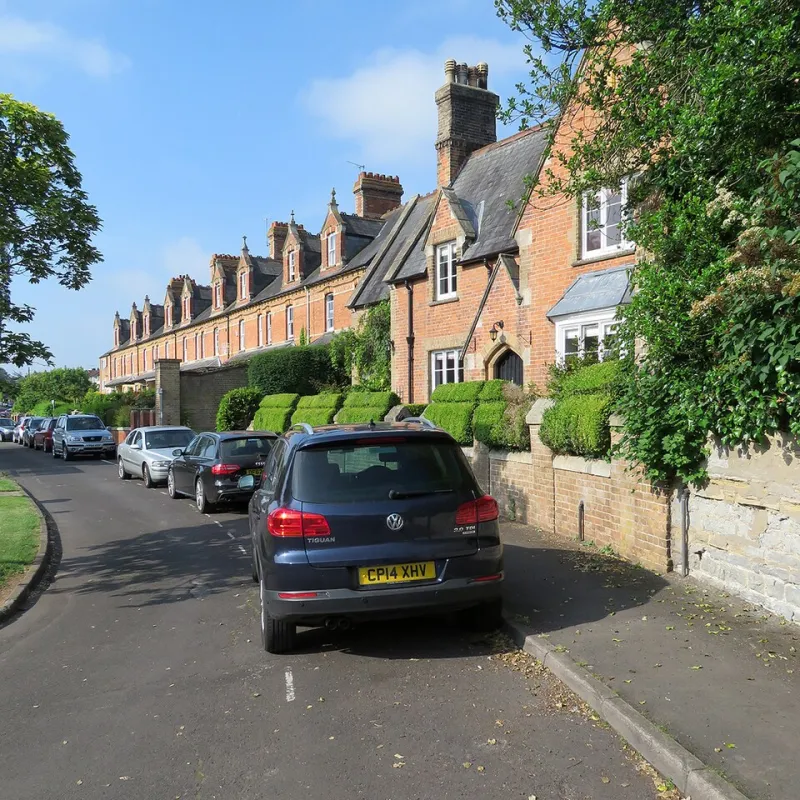
Photo: Kenneth Allen, CC BY-SA 2.0, via Wikimedia Commons
Somewhere on the lane, a van door slams at twenty to seven. Then the recycling lorry. Then a delivery driver having a robust conversation with his satnav. If you live in a characterful house on a busy or overlooked lane, you already know that the romance of the setting and the reality of the setting are two different things, and they meet at about the same time every morning.
The instinct, when the noise gets too much, is to rip everything out and start again: new windows, new doors, sealed everything. I would argue that is the wrong first move — both for the house and for your money. You can take a great deal of noise out of an old building with interventions that are reversible, relatively cheap and invisible from the street. Here is how I would approach it.
The character is not the problem
Original sash windows are not the villain of this story. A well-maintained sash in a solid wall does a reasonable job; the noise usually gets in around it, not through it. The gaps at the sides of the sashes, the weight pocket, the slightly sprung frame, the draughty letterbox, the chimney flue, the floorboards above a cellar — those are the leaks.
Which means the first job is diagnostic, not decorative. Walk the room at night when the traffic is quiet and you can hear the lane clearly. Put your hand near the window reveals, the skirting, the chimney breast, the door frame. You will usually find one or two genuinely bad spots rather than a wall that is uniformly failing.
Secondary glazing, done thoughtfully
For period houses, secondary glazing is the most underrated upgrade available. A slim aluminium or timber secondary unit fitted inside the existing reveal leaves the original window untouched, is often acceptable in conservation areas, and can cut perceived traffic noise substantially — particularly the mid and higher frequencies of tyres and chatter.
The details matter. A unit with a decent air gap, well-sealed to the reveal, and with the frame independently sealed rather than just screwed to the sill, will outperform a cheap lift-out panel by a wide margin. Lift-out and hinged panels are fine for occasional use and much cheaper, but they leak. If you have a listed building, removable secondary glazing is far more likely to be viewed kindly by a conservation officer than replacement windows, but always ask first — assumptions are how applications get refused.
Do not overlook internal shutters either. Solid timber shutters, closed at night, add mass and a surprising amount of quiet, and they are period-correct in many Georgian and Regency houses.
The door is usually the weak point
A front door on a lane is a hole in the wall with a letterbox in it. Fit a proper brush or flap letterbox, add a keyhole cover, and put a decent seal around the frame — discreet, surface-mounted options exist that do not require you to alter the door itself. A heavy interlined door curtain on a brass pole is an old solution that still works, and it has the bonus of making a draughty hall feel warmer.
If the back of the house faces the lane rather than the front, the same logic applies to kitchen doors, cat flaps and any utility door you have been meaning to sort out since you moved in.
Chimneys, floors and other sneaky routes
An open fireplace with an unused flue is a chimney-shaped megaphone. A chimney balloon or a proper flue cap will help, and is the sort of thing you forget about until the first windy night. Floorboards over a ventilated void can also transmit sound, and a thick rug with an underlay is not just a soft furnishing decision — it is a small acoustic intervention.
Trickle vents and extractor ducts are worth checking too. A vent that whistles is a vent that is not doing its job properly.
Soften the room on purpose
Hard surfaces bounce sound around. You do not need to turn a period sitting room into a recording studio, but a few deliberate choices make a real difference: interlined curtains that actually cover the window and hang past the sill, a rug that covers most of the floor, upholstered rather than hard seating, and a wall of books. Fabric and mass absorb; glass and plasterboard reflect.
This is the part of the job that costs the least and shows the quickest, which is why I would do it before committing to anything structural.
The lane outside is part of the room
Boundary treatment is where lane-side living gets interesting. A solid brick wall close to the house can actually make things worse by reflecting noise back at the facade; a hedge absorbs and scatters it. Yew, hornbeam, holly and beech all make dense, forgiving screens, and they look considerably better than a fence panel doing the same job.
Layering helps: hedge at the boundary, then shrubs, then a raised bed, then the wall of the house. Each layer takes a little more energy out of the sound. Avoid large areas of hard paving and gravel right under the windows if you can — they are echo chambers with good PR.
And on the subject of overlooking: pleached trees, tall shrubs and well-placed garden structures give privacy without the slightly hostile look of a six-foot close-boarded fence. You want the lane to feel screened, not besieged.
Planning, heritage and the 2026 realities
A few things to get straight before you spend money. In a conservation area, altering the front elevation — including windows, doors and cladding — may need permission, and an Article 4 direction can remove permitted development rights you assumed you had. On a listed building, internal and external works both need listed building consent, and secondary glazing counts.
Boundary walls and fences have their own rules, generally more generous at the rear than the front, but never assume. And if the noise itself is the issue, a call to the local environmental health team is free, though a statutory nuisance claim against a public highway is rarely the route to a peaceful night.
The honest conclusion
You will not make a lane-side house silent, and I would be suspicious of anyone who claims you can. What you can do is take the sharpness off it — the slammed doors, the shouting, the specific frequencies that wake you — while leaving the sash windows, the floorboards and the front door exactly where they have been for a century. Old houses are forgiving if you work with them. The trick is not to seal them up, but to listen to where they leak.