The Forgotten Metre: Giving the Side Passage a Job to Do
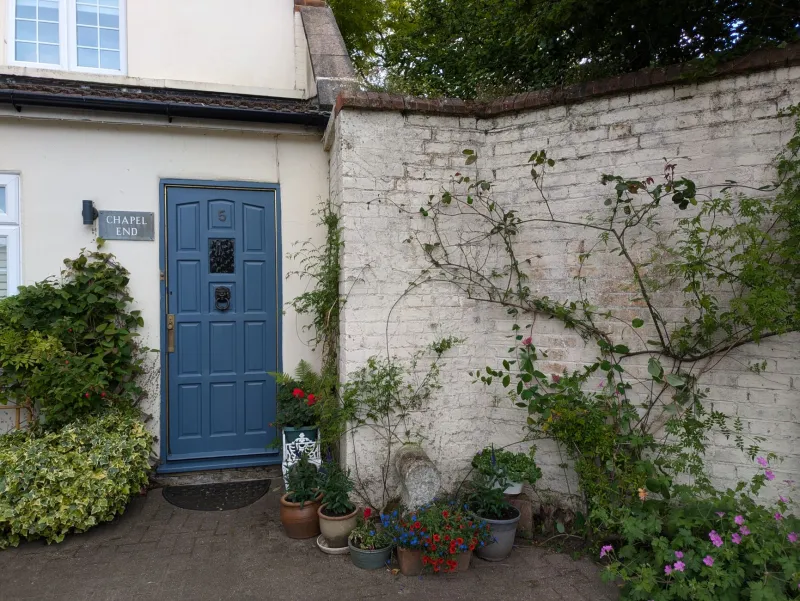
Every lane house has one: the slot down the side. Sometimes it is barely wide enough for a wheelie bin and a determined cat. Sometimes it is a proper side return, a metre and a half of shade between the house wall and the boundary. Either way, it is the part of the property that nobody photographs and everybody uses badly.
The passage tends to collect things. A bag of compost that never got opened. A ladder. The recycling box that the council replaced two years ago. Water sits in the corner nearest the downpipe, and a green fuzz creeps up the brickwork. It is not a room, so it never gets decorated. It is not quite outside, so it never gets gardened. And yet it is often the difference between a house that feels calm and one that feels congested.
Start with a route, not a scheme
Before you buy a single pot, walk the passage as if you were a visitor. Where do you actually need to go? If it is the back door, the route wants to be clear, dry-ish and lit. If it is the garden tap, the bin store or the side gate, the same applies. Anything that blocks the line of travel will be moved eventually, usually in a hurry, usually into the damp corner.
The most useful thing you can do is decide what the passage is for. A route. A light-well for a dark kitchen window. A buffer between you and the neighbour. A place for the messy end of gardening. It can be two of those things, but not all four at once. Choosing is the renovation.
Drains first, dreams second
Damp in a side passage is rarely a mystery. Water arrives from the roof, sits on a surface that does not drain, and has nowhere to go but into the wall. So the first task is boring and cheap: watch where the water goes in heavy rain. Clear the gully. Check that the downpipe discharges into a drain rather than onto the paving. If the ground falls towards the house, that is the thing to fix, not the paint colour.
A narrow channel drain across the threshold, a gravel margin along the wall, or simply a fall to a lower point will do more than any amount of sealant. Old brick likes to breathe; trapping moisture behind a waterproof layer is how you turn a small problem into a long one. If the wall is already wet, sort the drainage and let it dry before you decide on finishes.
A floor that can take a British winter
Side passages are shady, often north-facing, and get the worst of the weather funnelled down them. This is not the place for a perfect lawn or a pale rug. It is the place for materials that shrug.
Loose gravel over a geotextile is forgiving, cheap and easy to top up. Brick pavers laid on a proper base look right against old walls and can be relaid if they shift. York stone offcuts, set with generous joints, age well. The key is permeability — or at least a fall — so water moves away from the house rather than sulking underfoot. Avoid decking over a damp corner, and avoid sealing the ground tight against the brick.
Light is mostly about what you remove
You cannot widen a passage, but you can stop it feeling like a tunnel. Cut back anything that is brushing the wall. Take out the rusty bracket, the redundant pipe, the trellis that has become a spider hotel. A coat of something pale on a dark boundary wall — a soft limewash or a muted exterior masonry paint — will bounce light back into the house. So will a light-coloured gravel or a pale pot.
Mirrors are tempting and usually a mistake outdoors in a narrow passage; they go green, then grey, then slightly sinister. Better to use planting that catches the light: ferns, hakonechloa, sarcococca for winter scent, a Trachelospermum if there is a sunny patch. Climbers on a fixed wire will soften the boundary without stealing floor space. Keep them off the mortar joints and away from gutters.
Storage that does not become a landfill
The passage is the natural home for the unglamorous kit: bins, boots, brooms, the hose. The trick is to give each thing a place that is easy to return to. A slim, lidded bin store keeps the recycling out of sight and stops it blowing down the lane. A tall, narrow cupboard screwed to the wall holds tools and pots without eating the walking line. Hooks for the hose reel and the extending brush. A boot jack by the back door, if you are that sort of house.
The test is simple: if putting something away takes more than one movement, it will end up on the floor. Design for laziness and the passage stays clear.
The neighbourly metre
Side passages are often shared, or at least overlooked. If the boundary is a fence, check whose it is before you lean anything heavy against it. If there is a right of access, keep it clear — not just for courtesy, but because a dispute over a passage is one of the most exhausting things a lane house can produce. A trellis, a low hedge or a line of pots can mark the edge without fortifying it.
And if you are thinking of roofing the passage over to make an extension, pause. Light, drainage and access all change when you do, and the gain is often smaller than the drawings suggest. A well-organised open passage is frequently more valuable than a cramped extra room.
The short version
Clear the route. Fix the water. Choose a floor that drains. Paint the shady wall pale. Give the bins and tools a home. Keep the boundary friendly. Then leave it alone. The side passage will never be the star of the house, but when it stops being a dumping ground it quietly makes everything else feel better — the back door, the kitchen window, the walk to the garden. That is a good day's work for a forgotten metre.