Let the Kitchen Wear In: The Quiet Case for Rooms That Age

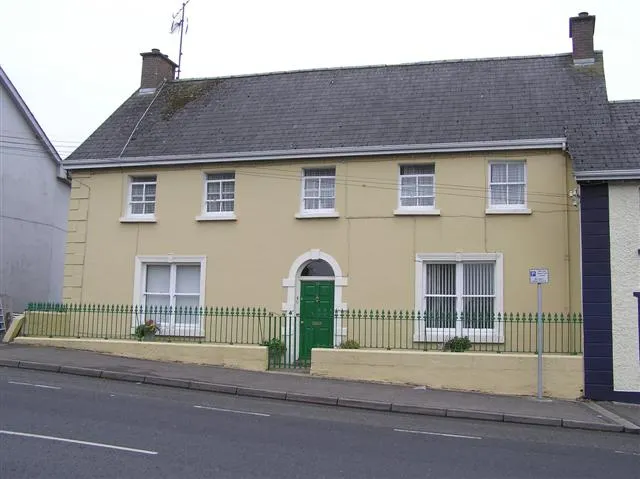
Photo: Eric Jones , CC BY-SA 2.0, via Wikimedia Commons
There is a moment in many old-house renovations when the kitchen stops being a room and becomes a showroom. The walls come down, the island arrives, the surfaces gleam, and the whole thing looks tremendous in a photograph. Six months later, the shine has dulled, the fingerprints have settled, and the house feels as if it has been quietly edited to remove the parts that made it interesting.
I am not against good design, and I am certainly not against a kitchen that works. But I do think the glossy, open-plan showroom kitchen is often the wrong answer for a British lane house. Old brick houses tend to have small rooms, deep reveals, uneven floors and a history of service spaces—pantries, sculleries, larders, back kitchens—that were not mistakes. They were practical, and they gave the house a rhythm. Knocking them all together can make a house feel bigger and, at the same time, less like itself.
The alternative is not a museum kitchen. It is a room that is allowed to wear in.
The trouble with the showroom look
Showroom kitchens are designed to be looked at before they are used. That is not a moral failing; it is what they are for. But the materials often show every mark, the layout assumes a certain kind of cooking, and the open plan assumes a certain kind of family life. In a lane house, the practical problems arrive quickly. Extraction becomes a bigger job when the kitchen opens into a living room. Noise travels. Smells travel. A large island can dominate a room that was never wide enough for one. And the crisp, flat surfaces that look so good on day one can look tired by year three.
Old kitchens, by contrast, often have something the new ones lack: a sense of use. A scrubbed pine table with a few knife marks is not damaged. A dresser with mismatched plates is not untidy. A pantry with shelves that have held the same jars for decades is not a problem to be solved. These things are the room's character, and they tend to get better, not worse, with time.
What a good old kitchen actually does
A pantry is one of the most useful rooms in a house, and one of the most frequently sacrificed. It keeps food out of the main kitchen, hides the bulk buys, and gives you somewhere to put the things that do not deserve a place on a showroom shelf. A larder with a marble slab or a ventilated shelf is a small piece of practical history. If you have one, think very hard before you remove it.
A dresser does the same job as a wall of tall units, but with more forgiveness. It holds the everyday plates, the odd jug, the tin of biscuits, and it does not mind if you are inconsistent. A scrubbed table is a workbench, a dining table, a place for homework and a place to put the shopping. It is not a statement piece. It is furniture that has a job.
Honest materials matter here: painted timber rather than high-gloss laminate, ceramic or quarry tiles rather than large-format porcelain, brass or unlacquered handles that patinate, solid worktops that can be sanded and oiled. They suit brick. They suit a lane. They do not ask the house to pretend to be something it is not.
How to update a dated kitchen without erasing it
Start with an audit before you start with a skip. What is actually worn out? What is merely unfashionable? Cabinet carcasses are often perfectly sound while the doors and handles are tired. A worktop may be chipped while the units below are fine. The layout may be awkward, but the room may still have a good heart.
If the cabinets are solid, consider painting them rather than replacing them. New doors and drawers can transform a dated run without the waste of ripping out good timber. If the doors are beyond saving, look at simple shaker or slab fronts in a colour that suits the house rather than a finish that reflects the room. Change the handles, the lighting and the tap before you change the whole kitchen. These small moves often do more than a full refit.
The same goes for the worktop. A timber or solid-surface worktop that can be repaired will age more gracefully than a thin laminate that chips at the edges. A Belfast or butler sink is not compulsory, but a decent ceramic sink with a simple tap will usually look better in an old kitchen than a complicated modern mixer with a pull-out hose and a digital display.
Keep the bones, improve the comfort
The parts of an old kitchen that are hardest to live with are usually the parts that can be improved without demolition. Under-cabinet lighting, better task lighting, a quiet extractor, proper insulation on external walls, and a sensible heating strategy will do more for daily life than a new island. If the floor is cold, insulate it if you can, or use a rug and accept that old houses have old floors. If the ceiling is low, do not fight it with a huge pendant; use wall lights or a slim surface-mounted fitting.
If you are changing the layout, be careful with the service spaces. Moving a sink is rarely just a plumbing job; moving a cooker can mean a new extraction route. Opening a kitchen into a dining room can be lovely, but it can also leave you with a long, thin room and nowhere to put the fridge. In a lane house, the best layouts often keep a bit of separation: a kitchen that is a room, a pantry that is a pantry, and a table that is allowed to be in the middle.
The case for rooms that improve
A kitchen is not a car. It does not need to be replaced every decade, and it should not be designed to look untouched. It should be designed to be used by people who cook, spill, scrub, stack and sit. The marks of that use are not failures. They are the point.
That is why the unmodernised kitchen deserves a fair hearing. Not because everything old is good, and not because character excuses a bad layout or a cold room. But because an old lane house already has a kind of beauty that a showroom cannot manufacture. It comes from brick, timber, worn stone and the accumulated habits of the people who have lived there.
Update the kitchen by all means. Make it warmer, brighter, more practical and more yours. But leave it room to age. A kitchen that improves with use is a far better investment than one that only looks good until the first scratch.