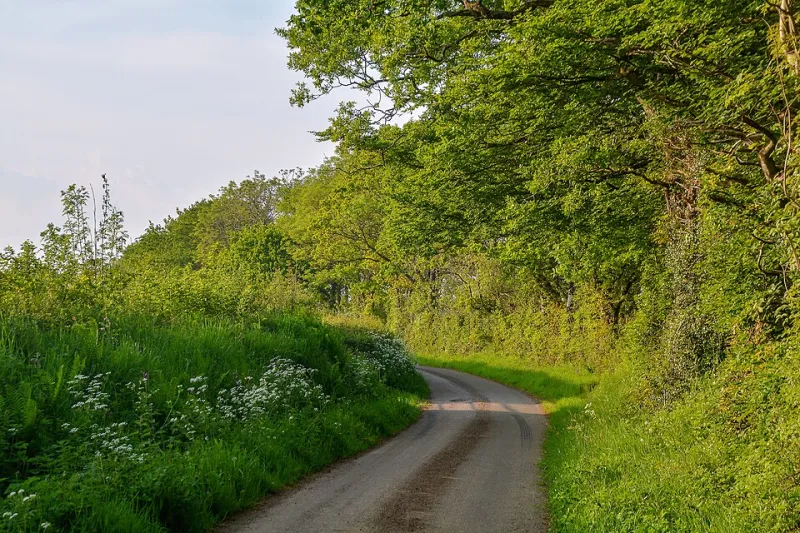
Hedges, Half-Walls and Handshakes: The Quiet Politics of a Lane Boundary

On a narrow lane, the boundary is rarely a tidy line on the ground. It is a low brick wall with a wonky coping, a laurel hedge that has crept a foot into the light, a feather-edged fence that predates everyone currently living there. In November, with wet leaves plastered to the mortar, these edges look permanent. In practice, they are often the least understood part of a house.
Most of us inherit a boundary rather than create one. We know the wall is there. We do not always know who owns it, who last repaired it, or whether the line on the deed has anything to do with the line in the garden. The question tends to arrive with a shifted coping stone or a hedge that needs cutting: whose job is this? The answer is usually less dramatic and more paperwork-shaped than expected.
Start With the Paper, Not the Pruning Saw
The first place to look is your title documents. For most registered properties in England and Wales, that means the Land Registry title plan. It is useful, but it is not a survey. Title plans show general boundaries, not usually the exact legal line. A thick black line on a plan can be a helpful sketch and a terrible guide to where a fence post should go.
Dig out your conveyancing pack and look for old conveyances, transfer plans, boundary agreements and any correspondence about maintenance. If you bought recently, your conveyancer may have raised boundary enquiries. If you have been in the house for years, the pack may be in a box in the loft, which is still cheaper than starting a dispute. Ask before you assume. The previous owner's recollection is not a legal document, but it can point you towards one.
If the deeds are silent, as they often are, do not panic. Silence is common on older lane properties. It means the practical evidence matters more, and it means a conversation with your neighbour matters more still.
What the Title Plan Is Trying to Tell You
A title plan can show a boundary as a general line, but it will not usually say 'this wall belongs to number 4'. Some deeds mention a party fence wall, a shared wall, or an obligation to maintain jointly. Others are beautifully vague. A wall may be owned by one side, maintained by both, or owned outright by neither in any clear documentary sense.
Physical clues can help, but they are not conclusive. Buttresses, piers and retaining walls sometimes suggest who built what and why. A fence post line may follow the deed, or it may follow an old garden path that nobody has moved since 1978. The side that paints the wall is not automatically the side that owns it. The side that complains about the ivy is not automatically liable for the pointing.
This is where a conveyancer or boundary surveyor earns their fee. A short professional opinion is usually cheaper than a long neighbourly cold war.
Read the Wall Before You Repair It
Old lane walls are not generic. They may be brick with lime mortar, flint, stone, cob or a patchwork of repairs from several centuries. Before anyone repairs or replaces a shared wall, check whether it is listed, in a conservation area, or retaining ground. Local authority consent may be needed for works that seem minor. If the wall is a party fence wall under the Party Wall etc. Act 1996, there may be notice requirements. If it is simply a garden fence, different rules apply. The point is not to drown in legislation; it is to ask the right question before the first brick comes out.
If the wall is shared, agree the scope in writing. A short message confirming what will be done, by whom, at what cost and when is worth more than a warm feeling over the gate. Take photographs before work starts. Agree how the wall will look afterwards. If one side is paying, say so clearly. If costs are shared, put the split in writing. A surprising number of boundary arguments are really arguments about expectations that were never spoken aloud.
When the Deed and the Garden Disagree
It is common for the legal line and the lived line to differ. A hedge planted half a metre over the boundary. A fence moved to make room for a shed. A wall built by a previous owner who assumed nobody would mind. These things happen quietly over decades.
If you discover a discrepancy, resist the urge to arrive with a tape measure and a sense of righteous fury. Start with a conversation. Most neighbours will not know either. If the matter is serious, mediation is often faster and cheaper than solicitors' letters. Boundary disputes have a way of becoming the most expensive thing in the garden.
A useful rule: deal with the practical problem first. If a wall is unsafe, make it safe. If a hedge is blocking light, discuss trimming before discussing ownership. The legal line can be settled later; the relationship has to survive the intervening weeks.
Hedges Have Their Own Weather
Hedges are not walls, and they do not read deeds. A boundary hedge may belong to one side, or be jointly maintained, or simply be accepted as everyone's business because it has always been there. If it is evergreen and over two metres, local authority high hedges legislation may eventually come into play, but that is a last resort, not a first move.
Remember nesting birds before cutting between March and August. Remember that a hedge is a habitat as well as a boundary. And remember that trimming a neighbour's hedge without asking is rarely the shortcut it feels like.
The Neighbourly Bit
On a lane, boundaries are shared infrastructure even when they are not shared ownership. The best ones are boring. They do their job, they are repaired before they fail, and nobody has to think about them for another decade.
So keep the paperwork, take the photographs, ask before you cut, and be generous about the small stuff. The line between two gardens is worth getting right. It is also worth keeping friendly, because on a narrow lane you will see each other every morning.