Chimney, Pot and Parapet: Learning to Read the Skyline of an Old Brick House
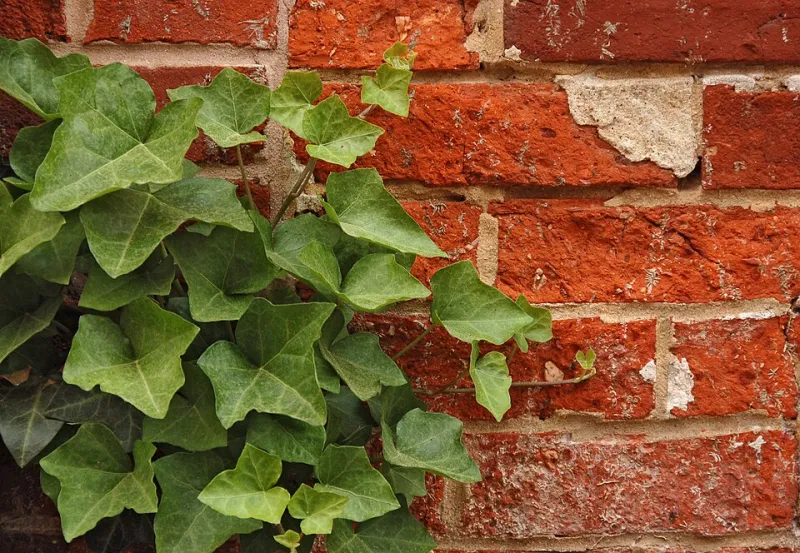
Photo: Photo by and (c)2007 Derek Ramsey (Ram-Man), GFDL 1.2, via Wikimedia Commons
Most people arrive at a lane house and look at the door. Fair enough — doors are where the manners are. But step back twenty paces, ideally to the other side of the lane where the light rakes across the bricks, and the house introduces itself in a different order. The roofline speaks first. Chimneys standing about with their pots in a row, a parapet doing its best to look like the top of the wall, a ridge that has settled into a shape no builder ever drew on a plan. It is the one part of the house you cannot repaint, which is precisely why it stays honest.
The silhouette is the signature
Walk any lane of old brick houses and you can identify half of them from the roofline alone. There is the low catslide sweeping down over a rear outbuilding; the half-hipped end that suggests someone ran out of money or nerve; the stubby parlour stack at the front and the taller kitchen stack behind. Add a dormer from the 1980s, a Velux from the 2000s, a slightly different pitch where an extension joins, and you have a skyline that is really a diary.
This is why the roofline deserves more attention than it usually gets. Front gardens get replanted, doors get repainted every few years, but roofs are left alone until something leaks. By then the small signals have been shouting for a decade.
What a chimney is telling you
Start with the stack. A chimney that leans is not automatically in trouble — plenty have leaned gently since the Victorians — but a lean that has changed within your own memory is a different matter. Look at the haunching, the flaunched mortar at the base where the stack meets the roof. If it is cracked and holding water, the chimney is quietly rotting from the bottom up.
Look too at the flashing where brick meets slate or clay. Lead should be dressed neatly into the brick joints, not smeared over with black sealant by someone in a hurry. And look at the pots. A row of matching terracotta pots is charming; a row of three different pots, one of them cracked and one replaced with a buff-coloured newcomer, is more charming still, and considerably more truthful. The Victorians were not fussy about uniformity, and neither should you be.
Parapets and the gutter nobody can see
A parapet is a lovely lie. It hides a box gutter running behind it, and that gutter is one of the most neglected pieces of drainage in British housing. When it fails, the water does not drip somewhere convenient — it goes into the wall, down the brickwork, and out through the plaster in the back bedroom three months later.
Coping stones and kneelers should sit proud, with sound joints. If they have been pointed in hard cement, water gets trapped behind and has nowhere to go but inwards. Repointing a parapet in lime is not a luxury; it is the difference between a wall that dries and a wall that quietly soaks.
Gutters, falls and the wet foot of the wall
Cast-iron half-round gutter, well bracketed, with a proper fall towards the hopper, is a beautiful thing and increasingly rare. Plastic has its place, but it sags between brackets and the joints open. Either way, the test is simple: after rain, does water reach the downpipe briskly, or does it loiter?
Then follow the downpipe. If it discharges straight onto the brick plinth, the foot of your wall is permanently damp, and the salts will start to show as white bloom on the lower courses. A shoe directing water into a gully is a five-minute fix that saves a decade of spalling.
When a sag is honest and when it is a warning
Old roofs relax. A purlin line that dips a little, a ridge with a gentle wave, a slightly bowed slope over a long run — these are the ordinary consequences of timber doing its job for a hundred and fifty years. Do not panic, and please do not let a roofer talk you into a full strip on the strength of a dip you could see in 1995.
But there are signals worth acting on. A sharp step in the ridge rather than a curve. Diagonal cracking in the gable brickwork. A bow that has visibly worsened in a single winter. Anything that looks like movement rather than settlement deserves a structural engineer, not a builder with opinions.
Repairs that leave the character alone
Sympathetic repair, in practice, means three things. Use lime mortar rather than cement on old brick and stone. Match materials honestly — reclaimed clay pantiles, second-hand slates of a similar size, brick of a comparable colour and hardness. And resist the urge to make everything new at once. If four pots need replacing, replace four and keep the rest, including the mismatched one.
What to avoid: spray foam insulation on the underside of a slate or clay roof (it traps moisture and can rot the battens), silicone coatings on tiles, and wholesale replacement of a clay roof with concrete tiles because the quote was keener. That last one changes the silhouette of the lane permanently, and no amount of subsequent good taste will put it back.
The small clutter at the top
Aerial, satellite dish, and a run of new pots can undo a lot of careful work. If you must have a dish, put it where the eye does not land from the lane, and consider that most of us now stream anyway. Bird guards on pots are sensible and almost invisible from ground level.
Getting up there properly
Do not lean a ladder against a gutter and call it an inspection. A scaffold tower or a roofer with insurance is cheaper than an accident. If your house is listed, or sits in a conservation area, check before replacing chimneys, pots or roof coverings — consent is often needed for exactly the changes that seem most innocent.
The roofline is the part of the house you inherit rather than choose. Keep it sound, keep it dry, and let it stay a little wonky. That wobble is not a fault. It is the signature.