Warm White, Looped Cable, No Drilling: Lighting a Lane House for the Dark Half of the Year

Photo by Photo by Frederick Wallace on Unsplash on Unsplash
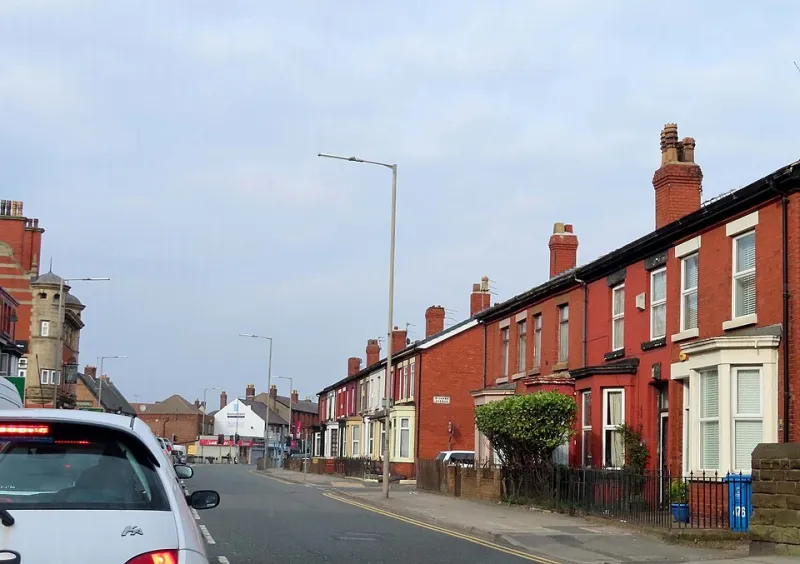
There is a moment in early November when the lane turns the corner before the rest of us do. You come home at half four, the sky is already that flat pewter colour, and the only thing keeping the terrace from disappearing entirely is a security light two doors down blazing away at something that isn't there. It's around now that people start eyeing up their brickwork and wondering where a string of lights might go.
Fair enough. A little warmth on a dark frontage does more for a lane than most people give it credit for. But old brick is an unforgiving host: it spalls, it stains, it holds a grudge about a snapped screw for a decade. So the trick is to plan the thing properly before you're up a ladder in fingerless gloves.
Decide what the light is actually for
Before bulbs, decide the job. Most lane frontages want three things and no more: a welcome at the door, a bit of shape along the elevation, and enough light on the path that the step doesn't ambush anyone. That's it. Anything beyond that is decoration, which is fine, but decoration is where people overreach and start drilling.
Three jobs, three sorts of fitting. A single warm lamp above the door. A run of small bulbs along the eaves or a wire across the frontage. A couple of low, downward-facing lights on the path or in a planter. Everything else — outlines, icicles, netting, the full Blackpool — is a choice, but it's a choice that asks a lot of fixings.
The colour of the light matters more than the count
Here's the thing nobody tells you at the garden centre: a cool white bulb will make Victorian red brick look grey and slightly ill. That blue-white 4000K light that reads as crisp indoors drains all the iron oxide out of a wall, and worse, it bounces straight into the windows opposite.
Aim for 2200K to 2700K. That's the amber end of warm white — the colour of a proper old filament lamp, or a candle behind glass. On red and orange brick it reads as depth and richness. On pale Suffolk whites and painted render it reads as a soft wash rather than a spotlight. On dark brick — the near-purple engineering sorts — it's the only thing that keeps the wall from looking like a hole in the street.
Buy one string first. Hold it against the wall at dusk, before you commit to forty metres of the stuff. Bulbs are cheap; regret is expensive.
Fixings that don't ask mortar to do the work
Mortar is the sacrificial part of a brick wall. It is designed to be softer than the brick so that movement and moisture damage the joint rather than the unit. Which means drilling into a joint to hang a light is asking the weakest part of the building to hold a load, and giving water a fresh route in. Don't.
Better options, roughly in order of how much the wall will thank you:
- Existing timber. Fascia boards, bargeboards, soffits and door frames will take a small stainless screw happily. Most of a lane house's lighting can hang off timber alone.
- Gutter and eaves clips. Spring clips designed to grip the lip of a gutter or the edge of a fascia cost pennies and hold a light string without touching masonry.
- A tension wire. Two anchor points — a sound timber post at one end, a gate pier or a sturdy bracket at the other — with a stainless wire between them, and the lights hung from that. Elegant, removable, and the brick never knows.
- Ground and planter fixings. Weighted bases, stakes, a stake pushed into a border. Zero contact with the wall.
- Cable ties around a downpipe. Fine for a cable, not for a fitting. Pad the pipe with a strip of rubber so you don't scuff the paint.
If a wall fixing is genuinely unavoidable, go into the brick face with a correct masonry bit, not the joint, and no hammer action on soft or perforated brick. Use stainless steel, seal the hole with a neutral-cure silicone rather than an acetic one, and avoid mild steel hooks entirely — they bleed rust down a wall within a season and the stain outlives the light.
The cable route is most of the job
A tidy route looks deliberate; a slack one looks like a hazard. Three rules carry most of it.
Keep clear of air bricks. A blocked vent is a damp problem waiting for February, and it's the sort of thing you won't notice until the plaster inside goes cold and patchy.
Keep clear of anything that moves — the door swing, the letterbox, the gate, the bin lid. And keep cables out of head height across a footpath. On a narrow lane frontage, anything crossing the walk at eye level will be found by a visitor in the dark, usually with their face.
Finally, drip loops. Where a cable runs down to a socket or a transformer, give it a low belly so water runs off the bottom of the loop rather than tracking into the connection. And keep transformers indoors where you can — a plug-in driver in the hallway is a driver that stays dry.
Power, done properly
Outdoor sockets should be IP66 and RCD-protected, ideally on their own circuit, and if you're relying on a plug-in RCD adaptor, test it before the season starts rather than after. Low-voltage 12V and 24V systems take most of the drama out of wet weather; if you're going mains, buy fittings rated for permanent outdoor use, not the indoor sort in a hopeful plastic bag.
Extension leads should be fully uncoiled, outdoor-rated, and never daisy-chained. Add up the wattage before you add a fifth string to the same plug — LED strings are frugal, but transformers and older incandescent sets are not.
Being a decent neighbour after dark
A lane is a shared room with no ceiling. Light from one frontage lands in the windows opposite, and a bright cool wash at 2am is a genuinely irritating thing to do to somebody.
A plug-in timer with a dusk sensor, set to go off around half ten or eleven, solves most of it. Downward-facing fittings, shields and dimmer warm bulbs solve most of the rest. Skip anything that flashes, chases or pulses — nobody has ever been charmed by a strobing porch.
And a small aesthetic point that pays off: pick out one thing well rather than outlining everything badly. A door, a bay, a single tree in a pot. Restraint is what makes a lit frontage look like a house rather than a display.
Taking it down without leaving a mark
January's removal does more damage than December's installation, in most cases, because people do it in a hurry on a freezing afternoon.
Wait for a mild, dry day. Plastic clips go brittle below about five degrees and snap, and snapped clips mean cut cable ties and scraped brick. Photograph the layout before you start — where each string ran, which transformer went where — so next November isn't an archaeology project.
Cut cable ties rather than pulling them, coil cables over your arm in generous loops, and store the lot in a lidded box with the timer and the spare bulbs. Then look at the wall properly. Brush down any green algae or grime with a soft brush and plain water — never a pressure washer, which will strip mortar and open the brick face. Rust streaks need a nylon brush and a little warm soapy water, and a note to yourself to buy stainless next time.
Finally, make a list of anything you spotted while you were up there: a hairline crack in a lintel, a bit of pointing that's gone crumbly, a tile slipping at the eaves. Winter will have found the weak spots for you. Write them down now, and they become a spring job rather than a January emergency.