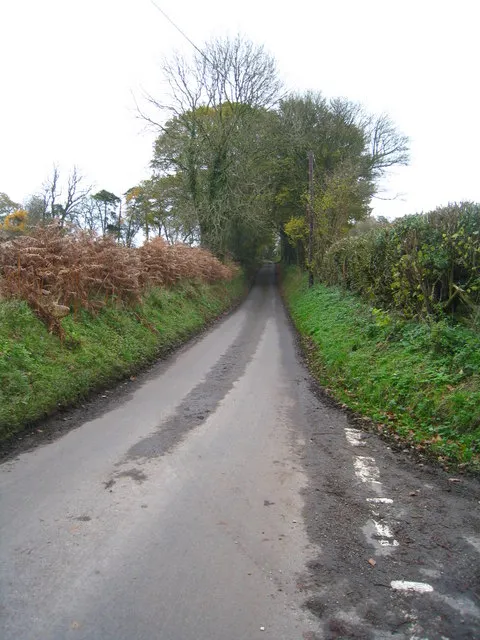
Bins, Bikes and a Battery on the Lane: Where Everything Goes When There Is No Drive
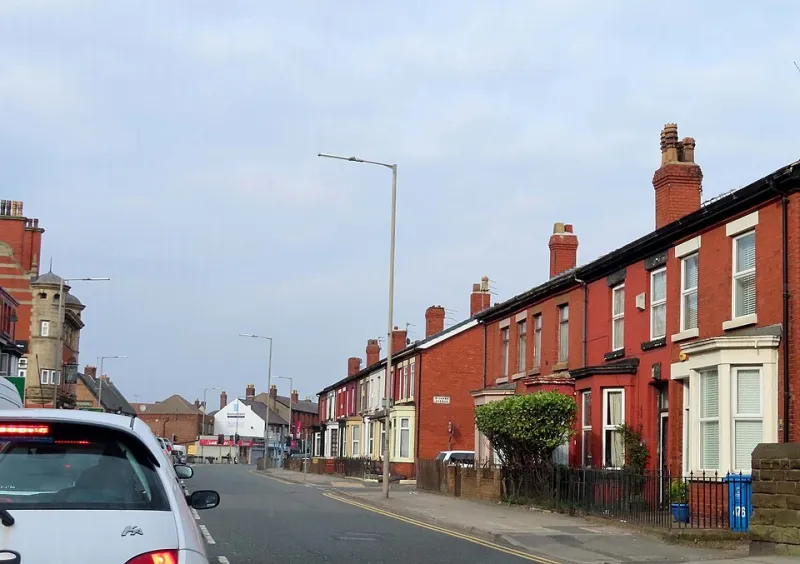
Photo: Steve Daniels , CC BY-SA 2.0, via Wikimedia Commons
Most lane houses were built for a horse and cart, a coal shed and a family who regarded the motorcar as a passing novelty. A century or so later, the same twelve feet of frontage is expected to host two cars, three bins, a couple of bikes and, increasingly, a charge point. It does not fit. And the temptation — the very understandable temptation — is to pave the lot, flatten the wall and call it a drive.
That is the point at which a lane stops being a lane. What follows is a practical look at the awkward bits: what the council will say, where things actually go, and how you can run a working frontage that still looks like it belongs on a street of brick terraces.
The kerb is the real front door
Everything about a lane frontage is decided at the boundary. Whether there is a footway at all, whether the wall is yours or the highway's, whether a gully runs along the edge — these determine what is possible far more than the size of the plot does.
Before you sketch anything, take photographs of the boundary at three points along the lane and check your deeds and the local highway register. On many older lanes the first metre inside the wall belongs to the council, and that changes the maths on a bike store completely. It also explains why so many well-meant front garden projects stall at the first enquiry: the plan was drawn before anyone looked at who owns what.
Paving the front garden: what actually needs permission
In England, replacing a front garden with hardstanding is often permitted development, but only within limits. The usual test is drainage: if you use a permeable surface, or water is directed to a soakaway within the boundary rather than running off to the road, you can often proceed without a planning application. Above roughly five square metres of impermeable surface draining to the highway, an application is generally needed.
Two caveats bite on lanes. First, conservation areas and Article 4 directions strip away many of those permitted rights, and plenty of characterful lanes sit inside one. Second, a dropped kerb is a separate consent entirely, granted by the highway authority rather than planning. They can and do refuse where the sightlines are poor, where there is no safe crossing point, or where the carriageway is simply too narrow — and a lane with two-way traffic and no footway is exactly that case.
If a dropped kerb is refused, that is not the end of the argument, but it does close the door on parking. Build the bin store and the bike shed anyway; they need no kerb.
Bins: the least glamorous design problem on the lane
Bin day on a narrow lane is a small logistical crisis. Most councils require containers at the boundary on collection morning, and most highway authorities dislike anything left on the carriageway or blocking a footway. So the store has to be at the front, near the gate, and it has to open the right way.
A few things that work:
- A three-sided enclosure with a hinged lid, roughly 1.8m wide by 0.8m deep for a standard set of wheelie bins, set back from the wall line so the containers can be pulled out rather than dragged sideways.
- Slatted or hit-and-miss timber rather than solid panels. Air moves, smells disperse, and the structure dries out after a wet week.
- A gate in the wall aligned with the store, so bins leave the property without a wrestling match.
- A hard, level apron of about a metre in front. This is the detail that decides whether the whole arrangement is tolerable on a dark February morning.
Keep the store below the height of the wall coping where you can. It will read as part of the boundary rather than an addition to it.
Bikes and the shed that shrugs
Bikes are the reason many lane households fail the storage test. Two adult bikes want about 1.8m by 0.9m of floor, plus room to manoeuvre. A store that size in a front garden is a real presence, so it needs to look deliberate.
Options that hold up on a lane:
- A timber bike store with a living roof. The green roof softens the top edge and keeps the interior cooler, which is kinder to batteries and tyres.
- A wall-mounted vertical rack under a deep porch or carport canopy if the frontage is only a metre or two deep.
- On-street hangars, where the council runs them. Several authorities now install cycle hangars on residential lanes; if five or six households want one, it is worth a joint approach to the highways team.
- A shared store between two or three neighbours in a gap between properties, which is often the most elegant answer of all on a terrace.
Whatever you fit, anchor it. A lightweight plastic box in a windy lane with a wall behind it will end up against the wall, in the road, or in a hedge.
Charging when there is nowhere to park
This is where lane living gets genuinely tricky. If you have no off-street space and no dropped kerb, an EV charger on the front wall is of limited use unless you can park consistently outside.
Practical routes:
- A resident permit and a regular kerbside position. Not guaranteed, but many lane residents effectively have a habitual space. A wall-mounted charge point with a cable long enough to reach the kerb is the standard solution, often with a cable gully cut across any footway to keep it trip-free and compliant.
- On-street charging. Some councils have installed charge points on lamp columns or dedicated bays. Worth checking before you spend money on your own unit.
- Shared or community charging in a neighbouring property's forecourt, if a formal arrangement with a neighbour is possible.
- A charge point mounted inside the gate line for a plug-in hybrid or a car that can be parked nose-in on the rare occasions it fits.
If you are digging anyway for drainage or a new path, lay a duct. It costs very little now and saves an excavation later.
Keeping the lane looking like a lane
The design principle that holds all of this together is continuity. The lane reads as a lane because the wall line is unbroken, the materials repeat, and nothing is much taller than a gatepost.
So: match the wall coping. Keep new structures set back at least 200mm from the boundary. Use one material for the store and the gate. Choose muted colours that pick up the brick or the render rather than contrast with it. Plant something in front of the hard standing — a yew, a bay in a pot, a strip of gravel and lavender.
And accept the small compromise that gives the biggest return: a forecourt that holds one car and a bin store will always look better than a forecourt that holds two cars and nothing else.
A short working checklist
- Check ownership of the first metre inside the boundary.
- Confirm conservation area or Article 4 status before assuming permitted development.
- Apply for the dropped kerb separately, and early.
- Size the bin store to your actual containers, not the ones in the brochure.
- Bury a duct for a future charge point.
- Keep everything below coping height.
- Leave a metre of level apron in front of every door, lid and gate.
None of this is glamorous. But a lane house that handles its bins, its bikes and its cables quietly is a house that can get on with the more interesting business of paint, brick and front garden planting.