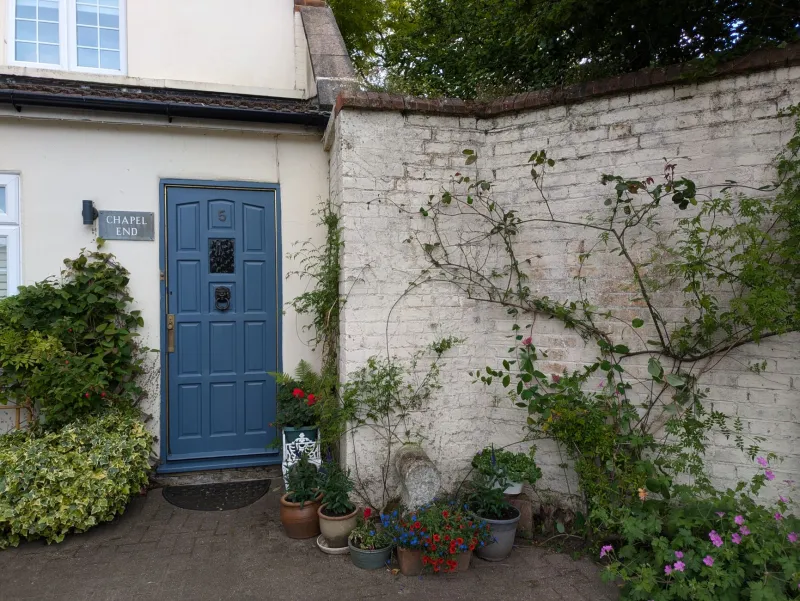
After the Rain: A Wet-Day Walk Around aLane House

There is a particular kind of quiet after a night of hard rain on a narrow lane. The gutters are still ticking, the brickwork has gone a shade darker, and the puddles are busy telling you things the estate agent never mentioned. A wet-day walk around the outside of a lane house is not a chore. It is one of the cheapest surveys you will ever carry out.
The point is not to panic at every damp patch. Old brick gets wet; that is part of its character. The point is to notice where water lingers, where it jumps out of a system that should be carrying it away, and where a small maintenance job now might save you a much larger conversation with a builder later.
Start with your eyes, not a ladder
Wait until the rain has eased but the water is still running. Walk the frontage slowly. Look at the roof line, the gutter, the hopper, the downpipe and the ground in that order. You are following the journey water is supposed to take: roof to gutter, gutter to hopper, hopper to downpipe, downpipe to gully, gully to drain.
Most problems announce themselves somewhere along that route. A gutter that is sagging or full of leaves will send water over the front edge, often straight down the wall. A hopper that has silted up can turn into a small waterfall at the corner of the house. A downpipe that discharges onto the ground rather than into a gully will quietly soak the base of the wall, the plinth and whatever paving sits nearby.
You do not need to climb. A phone camera on a selfie stick, a telescopic mirror or a pair of binoculars will let you inspect most gutters from ground level. If a job needs a ladder, treat it as a job for someone with the right equipment and a second person nearby. Lane-house gutters are often higher and more awkward than they look.
The gutter is a system, not a decoration
Gutters are easy to ignore because they are above eye level and only matter when they fail. In a British autumn, they fail often. Leaves, moss, bits of tile and the general debris of trees will collect in the channel and at the outlets. Clear them before the wet spell settles in, then check again after a storm. Two small clear-outs a year are worth more than a heroic rescue in January.
Check the joints while you are at it. A gutter does not have to be cracked to leak; an old seal or a loose bracket can send a thin stream down the wall for weeks. Look for green algae, dark streaks or a line of splash marks on the brick below. Those are not aesthetic problems. They are water taking a route you did not intend.
Hoppers deserve special attention on lane houses because they often sit in tight corners where two roof slopes meet. When a hopper overflows, the water does not always fall neatly. It can hit a ledge, run sideways and find its way into mortar joints or behind a downpipe. If you see a waterfall at the corner during heavy rain, clear the hopper and check the downpipe before assuming the roof is at fault.
Gullies, grids and the shared bit
At ground level, the gully is the quiet workhorse. In narrow lanes, it is often shared between neighbouring houses, or at least positioned in a spot that serves more than one downpipe. Keep the grate clear of leaves, silt and gravel. Do not pour fats, paint, cement or garden waste into it. A gully is not a bin; it is the last chance for water to leave the frontage cleanly.
If the gully backs up after rain, first check whether the blockage is on your side. A simple grate full of leaves is your job. A drain that is slow even when the grate is clear may belong to a shared run, and that is where a little diplomacy goes a long way. A polite note through the door beats a rod down a pipe that turns out to be your neighbour's responsibility. Check your deeds or ask your solicitor if you are unsure. Shared drainage is one of those lane-house topics where a calm conversation is cheaper than a dispute.
Do not lift heavy covers unless you know what you are doing. Do not rod a shared drain from your end without warning anyone who uses it. And if water is backing up into internal gullies, sinks or toilets, stop and call a drainage professional. That is no longer a wet-brick question.
Wet brick, raised plinths and the warning signs
Brick is porous. After a long wet spell, it will hold moisture, and that is normal. The trouble starts when water is being delivered to the same patch again and again: a leaking gutter above, a downpipe discharging at the base, a paving level that sends splashes up the wall, or a raised brick plinth that sits in a puddle for days.
Look for a dark band at the base of the wall that does not dry out, white salt deposits, blown mortar, soft or crumbly brick faces, or a musty smell inside the room behind it. These are quiet warning signs, not a diagnosis. Very often the cause is a gutter or a gully, not a failed damp-proof course. Fix the water source first. Repointing with a hard cement mix before the leak is solved can trap moisture and make things worse; old brick generally prefers a lime-based mortar that lets it breathe.
A raised plinth is a characterful thing, and it is also a splash zone. If it is constantly wet, consider whether a downpipe can be extended into a gully, whether a small gravel strip can take the drip, or whether the paving falls away from the wall rather than towards it. Small changes in level matter more than expensive sealants.
Improving the flow without concreting the lane
There is a temptation, when water is causing trouble, to channel everything into a hard-edged concrete run. It looks decisive. It is rarely the best answer for a characterful frontage, and it can simply move the problem to a neighbour's door.
Better options are usually quieter. A water butt with a diverter can take roof water off the downpipe and use it in the garden. A shallow gravel-filled channel or a permeable surface can slow water down and let it soak away. A small rain garden, planted with things that tolerate wet and dry, can take a downpipe outlet and turn it into something beautiful rather than a wet corner. Clay pavers, set with gaps, or gravel over a proper base can keep the lane looking like a lane while still letting water through.
Check local rules before changing hard surfaces. In England, impermeable front-garden paving over a certain size can need planning permission, and conservation areas have their own expectations. If you are in any doubt, ask the local planning authority before the delivery lorry arrives.
A small seasonal routine
The best drainage routine is short and repeatable. In autumn, clear the gutters, hoppers and gully grates. After a storm, walk the frontage and look for new streaks or puddles. In spring, check the joints and the downpipe outlets again. Keep a note of where water sits, because patterns repeat.
Call a professional if a gully is cracked, a drain is collapsing, a shared run is persistently blocked, or damp is appearing inside after you have dealt with the obvious outside causes. And if you live on a lane, remember that water does not read title deeds. It goes where gravity sends it. A little maintenance, a little observation and a friendly word with the neighbours will do more for an old brick house than a frontage full of concrete.