The Buffer Room: Why a Lane House Porch Is Worth Getting Right

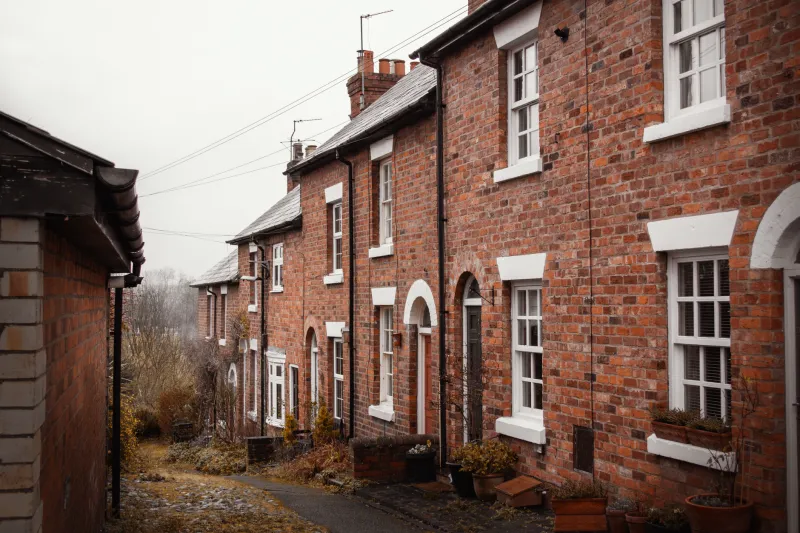
Photo by Photo by Phil Hearing on Unsplash on Unsplash
Most porches are asked to do two things at once: look as if they have always been there, and stop the rain from reaching the door. The first is a design question. The second is a practical one. On a lane house—where the frontage is often narrow, the door is close to the pavement and the hall is doing three jobs before breakfast—the porch has a third task. It has to act as a buffer.
The room that is not quite a room
A porch is a threshold with a roof. It is the place where the weather is taken off, literally: wet coats, muddy boots, a dripping umbrella, the dog shaking itself. It gives the front door a chance to be a door rather than a weather test. It also gives visitors somewhere to stand while you find the key, which matters more on a lane than on a drive.
The mistake is to think of it as a tiny conservatory. A porch is not a garden room with ambitions. It is a working space, and the best ones are honest about that. A bench, a boot tray, a hook for the lead, a shelf for the post—these small moves make it earn its keep. If it is deep enough to stand in without touching the door, it is already doing a job. If it is deep enough for a pushchair or a pair of wellies to sit out of the rain, so much the better.
Shelter, not statement
The difference between a graceful porch and a bolted-on box is usually proportions. A good porch borrows from the house: the pitch of its roof, the depth of its eaves, the colour of its brick, the rhythm of its windows. It does not need to be a copy. It needs to look as if it belongs.
On old brickwork, that means paying attention to mortar and bond. A porch in a hard, uniform brick can make a soft, weathered wall look suddenly tired. A timber porch painted in a colour already on the house—a muted green, a chalky off-white, a deep grey—can settle in more gently. Clay tiles or slate on the roof will age better than a flat felt lid, and a simple lead flashing will keep the junction with the house tidy.
Glass is useful, but it should not turn the front of the house into a lean-to greenhouse. Half-glazed sides, a solid lower panel, or an open-sided shelter with a bench can all work. The aim is to soften the arrival, not to blur the line between outside and inside until the hall loses its light.
The practical bits that matter
A porch only earns its keep if it is easy to use. That means a step that is not a trip hazard, a floor that can take wet boots, and a door that can be opened without knocking over the recycling. It means somewhere to put things down. It also means ventilation, because a sealed porch full of damp coats will soon smell like a wet dog.
If the porch is glazed, think about sun. A south-facing glass box can overheat in summer and turn the hall into a greenhouse. A north-facing one can be gloomy. A simple roof light or a side light can help. So can a bench with storage underneath, a shelf at waist height and a hook at the right height for a child.
Planning and the lane
In many cases a modest porch falls under permitted development, but the rules are not a free pass. Height, depth, boundary distance and the status of the building all matter. Conservation areas, listed buildings and Article 4 directions can remove the freedom entirely. If the house sits on a lane with a narrow frontage, the porch may also need to respect the building line and not crowd the pavement.
The sensible route is to talk to the local planning authority before buying materials. It is also worth talking to neighbours. A porch changes the view from their window as well as yours. A quiet word at the start is cheaper than a dispute later.
A small room with good manners
The porch is often the first thing a visitor meets and the last thing they touch on the way out. Done well, it is not a status symbol. It is a small piece of architecture with good manners: it keeps the rain off the paint, gives the boots somewhere to go, and makes the front of the house feel a little more considered.
On a lane, where space is tight and every metre is shared, that is no small thing. The porch is not a room you sit in. It is a room you pass through, and that is exactly why it deserves a second look.